
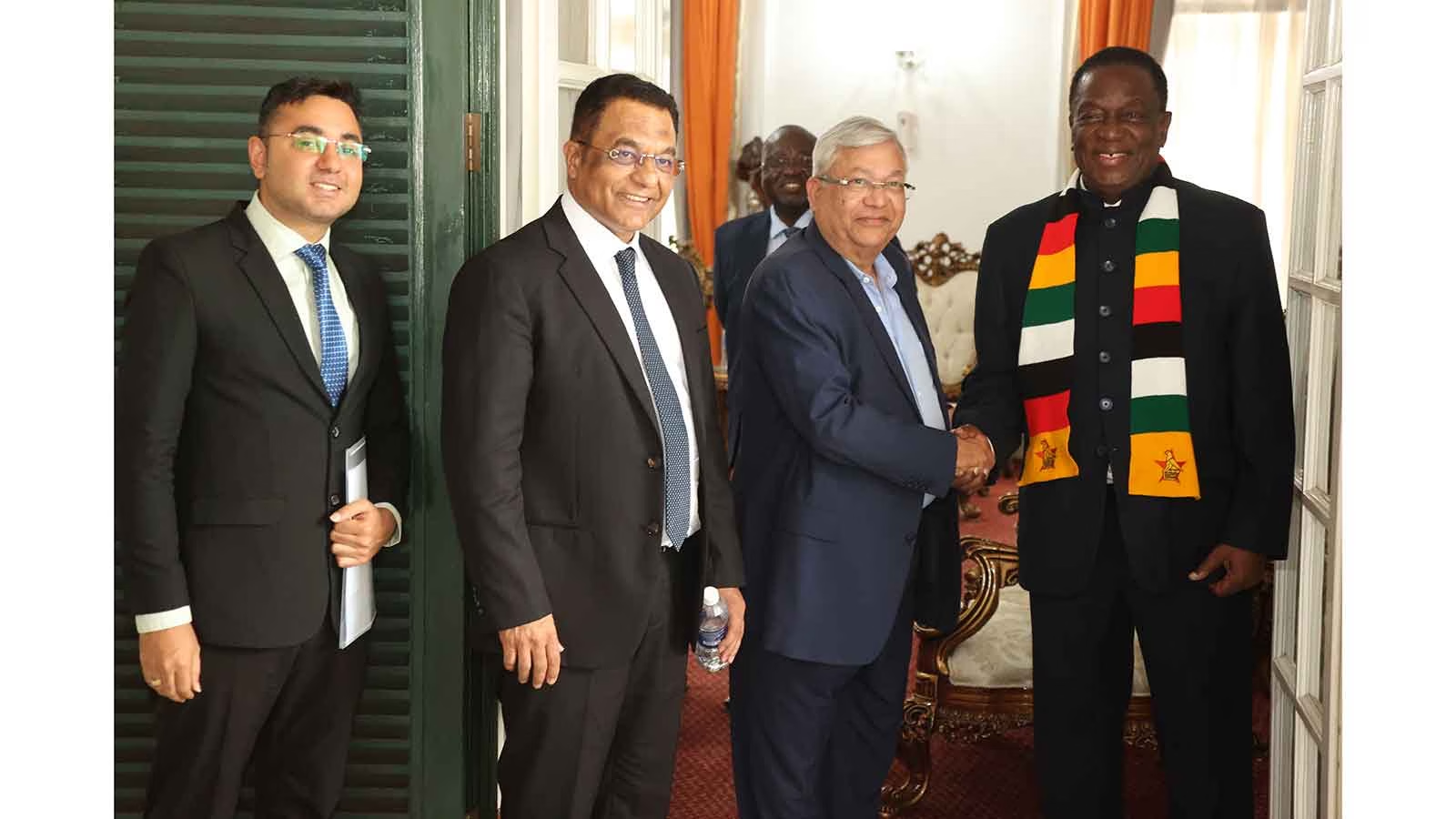
Harare, Zimbabwe – Varun Beverages Ltd (VBL) is significantly expanding its presence in Zimbabwe with an investment exceeding US$260 million in new manufacturing facilities for beer and snacks.
These state-of-the-art plants are slated for official inauguration by President Mnangagwa in the coming months, marking a substantial growth in the company’s food and beverage offerings within the country.
This considerable investment by VBL aligns with a broader trend of increased foreign direct investment flowing into Zimbabwe. The Second Republic’s proactive approach to attracting global capital across diverse sectors, encapsulated by its
“Zimbabwe is open for business” mantra, has been instrumental in drawing such commitments.
Recent high-level discussions at the World Government Summit in Dubai, where President Mnangagwa engaged with international investors on technology, mining, and infrastructure development, further underscore the administration’s dedication to positioning Zimbabwe as a competitive investment destination.
VBL’s investment includes a substantial US$250 million allocation for a new beer production facility, established in collaboration with the renowned Danish brewing giant Carlsberg. This venture is projected to generate approximately 2,500 local employment opportunities.
In addition to the brewing operations, VBL has channeled US$15 million into a new snack manufacturing plant. This facility will produce items under PepsiCo’s globally recognized Cheetos brand, complementing VBL’s existing snack portfolio which includes Lay’s, Doritos, and Simba.
The snack facility boasts an impressive production capacity of 6,000 tonnes per day, focusing on Cheetos puffs and ring-shaped snacks. The official launch of the Cheetos line in late January 2026 signifies a significant expansion of VBL’s manufacturing footprint in Zimbabwe.
Mr. Ravi Jaipuria, Chairman of Varun Beverages Zimbabwe, extended a formal invitation to President Mnangagwa to commission both plants in April or May of the current year. This invitation was extended following a courtesy call on the President at State House in Harare.
Mr. Jaipuria stated, “We have requested His Excellency to come and inaugurate our snacks plant with a capacity of 6,000 tonnes, under the brand name of Cheetos. We have also requested His Excellency to come for the groundbreaking ceremony for our beer plant, which has been tied up with Carlsberg, and we are hoping His Excellency will give us time in April or May to inaugurate the beer plant where we plan to invest US$250 million. The snack plant was around US$15 million.”
Highlighting the company’s commitment to local sourcing, Mr. Jaipuria noted that Varun Beverages has forged partnerships with local grain farmers who will supply maize for snack production, thereby fostering a robust agricultural value chain.
He further elaborated on the employment prospects, stating, “The snack plant will give about 100 people employment while the beer plant will have about 2,500 employees. The plants will help the farmers, with all the 6,000 tonnes for the snacks plant to be produced from maize purchased locally from farmers.”
These expanded maize-based snack and beverage projects are anticipated to generate substantial additional demand, creating more income opportunities for thousands of farmers and significantly strengthening the broader agricultural value chain. This initiative will also reinforce backward linkages between manufacturing and agriculture, leading to an employment multiplier effect through indirect job creation.
Demonstrating a long-term commitment to sustainable operations, Varun Beverages is also establishing its inaugural solar power plant. The initial phase will generate 20MW this year, with plans to add an additional 300MW over the next three years.
Mr. Jaipuria confirmed, “We are starting our first solar power plant, first layout at 20 megawatts which will be started this year and in three years we will complete 500 megawatts which will be commissioned in this country.”
The expansion by Varun Beverages serves as a testament to the growing investor confidence in Zimbabwe’s economic trajectory. The company’s management has previously acknowledged Zimbabwe’s evolving economic environment and improving currency stability as key factors creating new investment opportunities.
Economic analysts echo this sentiment, observing that the exchange rate stability achieved since the liberalization of the forex market in April 2025 has contributed to an easing of inflationary forward pricing. Consequently, prices of manufactured food and beverages are expected to soften in 2026.
Local production of internationally branded snacks and beverages is also poised to reduce the country’s reliance on imports, thereby preserving valuable foreign currency.
Industry experts suggest that localizing production typically results in more accessible pricing for consumers while simultaneously bolstering the national economy.

For comments, Feedback and Opinions do get in touch with our editor on WhatsApp: +44 7949 297606 or Email: editor@thezimbabwetimes.co.zw.

