
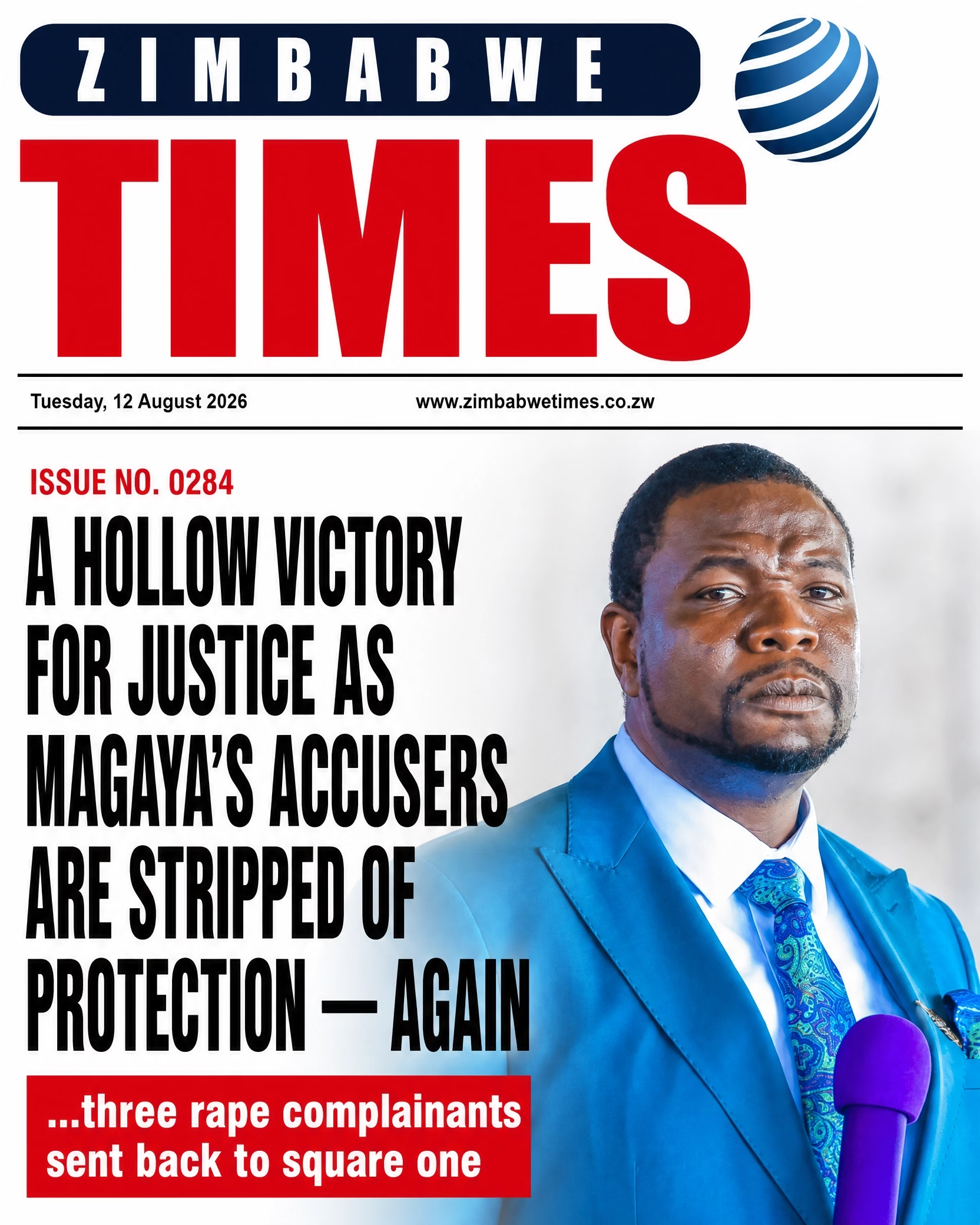
The High Court has set aside a magistrate’s ruling that allowed three women accusing Prophetic Healing and Deliverance (PHD) Ministries founder Walter Magaya of rape to testify as vulnerable witnesses, finding that the correct legal procedure was not followed when they were classified as vulnerable.
Justice Tawanda Chitapi vacated Harare regional magistrate Ester Chivasa’s February 16 ruling in a judgment handed down on July 30, sending the matter back to her court where prosecutors may make a fresh application for the complainants to receive special protection while testifying.
Magaya, the founder of PHD Ministries, faces three counts of rape involving women who were congregants at his church. He denies the allegations.
The State alleges the first complainant, then 24, was raped at Villa 13 at the Yadah Hotel in Waterfalls, Harare, in July 2020. Two further complainants, aged 22 and 21, were allegedly raped in the hotel’s Presidential Suite in July and December 2023 respectively.
When the trial was due to begin on February 16, Magaya’s lawyers objected to proceedings being conducted in the Victim Friendly Court — a specially equipped courtroom at the Harare Magistrates Court complex reserved for witnesses considered vulnerable — before their client had even been called upon to plead.
Prosecutor Clemence Chimbari subsequently applied under section 319B of the Criminal Procedure and Evidence Act (CPEA) for the complainants to be treated as vulnerable witnesses and for their evidence to be heard in camera. He told the magistrate the women had experienced significant mental and emotional difficulties, that some had expressed reservations about being in direct contact with Magaya, and that their previous relationship with him as congregants — coupled with the presence of church members following the proceedings — could place additional pressure on them as they gave evidence.
Magaya’s lawyers countered that the prosecution had presented no medical or psychological evidence establishing vulnerability, submitting that the prosecutor “was not a medical doctor” and “not a psychologist” to make such assessments. They urged the court to apply section 319C(2) and have the magistrate personally interview the women, and argued that preventing Magaya from directly facing his accusers would infringe his constitutional right to a fair trial.
Chivasa granted the prosecution’s application, reasoning that vulnerability did not have to be established through medical evidence and need only “appear” to the court. She defined a vulnerable witness as someone requiring special protection because testifying in an ordinary courtroom could cause serious distress or trauma. The magistrate went further, however, stating that “in rape matters all witnesses are vulnerable” and should not be forced to testify in open court.
It was that reasoning which the High Court ultimately took issue with.
In his judgment, Justice Chitapi said: “I must however note that it is an overstatement to say all witnesses in rape matters are vulnerable.”
The central issue in the High Court proceedings was not whether the three complainants should ultimately receive protection, but whether the magistrate had followed the process prescribed by law before reaching that conclusion.
Section 319C(1) of the CPEA requires courts to consider several factors when determining vulnerability, including a witness’s age, mental and physical condition, cultural background, relationship with the accused and the interests of justice. Justice Chitapi held that because the factors are joined by the word “and,” they must be considered together rather than selectively.
“The court’s role in such applications is therefore not a passive one,” he said. “The court must enquire into the listed factors… all must be traversed and findings of fact made.”
He found that Chivasa’s ruling had failed to properly engage with the statutory requirements, noting that “she did not even advert to the section by reference.” The judge also pointed to an inconsistency in the magistrate’s treatment of age as a factor: she had acknowledged that “a child, an adult or even a grandfather or 80-year-old could be a vulnerable witness,” yet then concluded that age “was not a factor to consider in this case.”
Despite setting aside the ruling, the High Court nevertheless rejected Magaya’s argument that allowing the women to testify under special arrangements would effectively create a secret trial. Justice Chitapi noted that Magaya would remain present throughout, retain legal representation and have the opportunity to cross-examine the complainants.
The judge also rejected the submission that Chivasa’s procedural failure rendered everything she had done legally void. “The applicant misses the point,” Chitapi said, explaining that the magistrate had not done something prohibited by law, but had instead failed to do something the law required — she “omitted to do what the law requires.”
Magaya also failed in his attempt to have the case transferred to another magistrate, with Justice Chitapi finding that he had “not proffered any justification for recusal of the first respondent from continuing to preside over the case.”
The February 16 ruling was consequently set aside and the matter returned to the regional court, where either side may raise the vulnerable-witness issue again under the correct statutory procedure. Justice Chitapi directed that the magistrate reconsider the application while “properly guided by the operative sections” of the CPEA.
No order was made as to costs.
Advocate Thabani Mpofu appeared for Magaya alongside Admire Rubaya and Everson Chatambudza, instructed by Rubaya & Chatambudza. Chimbari represented the Prosecutor-General together with Tendayi Shonhayi, Angeline Munyirwa, Kudakwashe Chigwedere and Foelane Chipo Muronda, instructed by the National Prosecuting Authority.

For comments, Feedback and Opinions do get in touch with our editor on WhatsApp: +44 7949 297606 or Email: editor@thezimbabwetimes.co.zw.

